For a new appointment
What matters at the first review? Which decisions can I make? Who resolves competing priorities? What support and protected preparation time are available?
First-case starts, room turnover, team development and surgeon relationships compete for your attention. Start with the measure, conversation or decision that needs a clearer next step.
$59 USD · One-time digital download · Individual use
1 individual-use license · no subscription
 ILLUSTRATIVE IMAGE · NOT AN ENDORSEMENT
The schedule does not pause while a leader learns staffing expectations, labor and productivity questions, operating priorities, team accountability, and how to communicate with executives.
These resources organize the leadership work behind surgical services. They do not replace clinical protocols, organizational policy, authorized guidance, or required escalation.
Use these questions alongside your employer’s onboarding. A clear plan needs realistic authority and resources.
What matters at the first review? Which decisions can I make? Who resolves competing priorities? What support and protected preparation time are available?
What am I holding steady, and what may I change? Which decisions remain with the sponsor? When is the assignment reviewed, and who receives the handover of open work?
If the work exceeds the resources or authority available, prepare that gap for a sponsor decision. A planning tool cannot supply missing staffing or decision rights.
Set clearer expectations, prepare for difficult conversations, and keep follow-through visible when the department gets busy.
Define first-case reliability, room turnover and productivity measures; check available time, staff and resources before adding services.
Build working awareness of labor, productivity, supplies, budget responsibilities, and the questions to bring to finance or executive leaders.
Agree service expectations, respond when service falls short and communicate respectfully when a request exceeds capacity or authority.
Each digital toolkit stands on its own. Choose the output you need; read the example and included files on its product page.
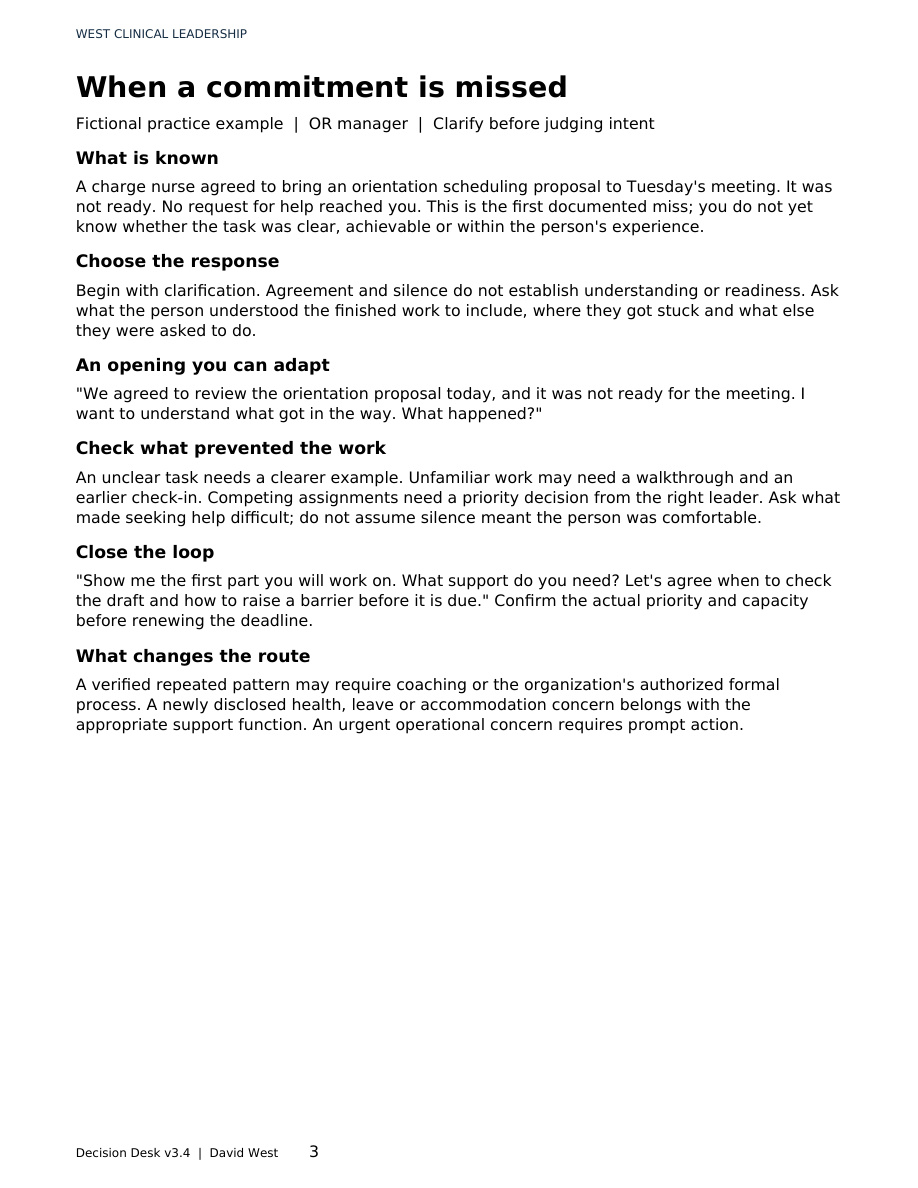
Prepare a conversation when expectations, conduct or competing priorities need attention. Work from what you know, check your authority and agree the next review.
Improve first-case starts, turnover and productivity; assess service-line growth and strengthen surgeon service. An Appointment Field Guide also supports new and interim leaders.
Optional companion: West Clinical Leadership 90-Day Leadership Planner for weekly priorities, decisions, and follow-through.
Use the first weeks to clarify responsibility, listen, verify the evidence and agree a useful first deliverable. Urgent responsibilities and required action take priority over a planning timetable.
Clarify authority, immediate risk, access, coverage, and what cannot wait.
Learn from the people doing the work and the partners who influence results.
Separate recurring patterns from one-time stories and inherited assumptions.
Agree regular updates, huddles, follow-up and when to ask for a decision.
Agree a first deliverable, the support it needs and how you will review it.
Ask about the format, contents or fit of a perioperative leadership resource. A product inquiry does not place an order.