The first case started late.
Everyone has an explanation.
The surgeon says the room was not ready. Nursing says a readiness issue was unresolved. Anesthesia describes a different sequence. Your director asks what you are going to do about the delay.
A fictional website practice case using the Decision Desk approach. It is separate from the paid manual excerpt below. It demonstrates leadership preparation, not a clinical protocol or a measured WCL result.
Do not turn one account
into the conclusion.
“We need a clear account of the delay. Before we assign a cause, let’s agree what happened, what each team needed and which part we can change.”
What you can say now
The planned and recorded start times differ. The teams have not yet reconciled their accounts. That is enough to request a focused review; it is not enough to name the cause.
First confirm what “start” means in the local record. Patient-in-room time, anesthesia readiness and procedure start are different events. Comparing unlike measures can create an argument that the data cannot settle.
If a safety concern is active, follow the required immediate response. A review of delays must not create pressure to bypass readiness or safety requirements.
The brief you can bring
to the director.
A useful first step is a focused request to review the facts together. It does not need a premature promise to eliminate delays.
- What is known
- The first case began later than planned. Nursing, anesthesia and the surgeon describe different parts of the sequence. The local definition and timeline need to be checked together.
- What is still unknown
- Whether this was an isolated event, which readiness dependency affected the sequence, and whether the same issue appears in comparable cases.
- What I recommend
- A short review with an authorized representative from each team. Reconcile the timeline using approved records, identify the first unresolved dependency and choose one issue that the responsible teams can address.
- The decision I need
- Confirm the sponsor and the right participants. Agree who may authorize any resulting workflow change. The nurse manager can prepare and convene the review within their authority; they cannot unilaterally commit other departments or alter safety requirements.
- Owner and next review
- In this fictional example, the nurse manager prepares the timeline for Thursday’s review. The sponsor confirms the action owner, the evidence to review and a follow-up date before the meeting ends.
“Why not just hold
nursing accountable?”
“If a nursing commitment was missed, I need to address it. I also need the timeline to distinguish that from an unresolved dependency. I’m asking for one focused review so the action matches the cause we can support.”
What makes this useful
You accept responsibility for the part you own, leave room for information that changes the conclusion and make a specific request. You are not asking the director to choose between defending the team and improving the work.
At follow-up, distinguish what was completed from what remains uncertain. A completed meeting is not evidence that the delay improved. Agree the local measure, comparison and review period before describing a result.
Five lines before
your next conversation.
- The observed event: what can you verify, using the same definitions?
- The assumption to check: which explanation are you treating as a fact?
- The next useful question: what would change your view?
- The request and authority: what needs to be decided, and by whom?
- The follow-through: who will act, when will you review and what evidence will count?
Use an employer-approved place for working notes. Keep patient details, employee information and confidential records off this website.
Another situation: a charge nurse missed an agreed commitment
An orientation proposal was not ready for Tuesday’s meeting. This is the first documented miss. Ask what happened before deciding what the response requires.
The expected result was unclear
The charge nurse thought you wanted a few ideas to discuss. You expected a written proposal. You had agreed a meeting date, but not the deliverable.
Ask: What did each of us understand would be ready for this meeting?
Next step: Agree what the first version must contain, show an example if useful and ask the charge nurse to describe the next step in their own words.
Follow-through: Review a one-page outline on Thursday. Confirm the essential content now, rather than discovering another mismatch at the review.
The person needed experience or support
The charge nurse understood the assignment but had never built an orientation scheduling proposal. They did not know where to start.
Ask: Which part can you take forward, and where would an example or support help?
Next step: Break the assignment into a realistic first step. Arrange the relevant educator or experienced colleague’s support, with their agreement.
Follow-through: First review the proposed sequence and questions with the educator. Agree the next milestone after confirming the help and time available.
A competing assignment displaced the work
Another leader gave the charge nurse a time-sensitive assignment. Both leaders expected their work to come first, and no one resolved the conflict.
Ask: What changed after we agreed this work, and who set the competing priority?
Next step: Clarify the priority conflict with the other leader. Make the tradeoff explicit before setting another deadline.
Follow-through: Confirm which task comes first, what is deferred and who should be contacted if priorities conflict again.
A barrier stayed hidden
The charge nurse had a question but delayed asking. They expected you to be too busy and were concerned about appearing unprepared.
Ask: What made it difficult to raise the question, and what could I have done to make that easier?
Next step: Hear the explanation without deciding its cause in advance. Address the unanswered question, examine your own response to requests for help and agree an earlier check-in.
Follow-through: Set a short review before the next deadline. Make the route for asking about a barrier specific, and follow through when the person uses it.
The same problem continues after clarification and support
You have verified several missed agreements. Expectations, available time and support have been discussed, and the pattern remains.
Ask: What does the documented pattern show, and what still needs to be understood?
Next step: Prepare the factual sequence and consult the appropriate authorized leader or HR partner about the organization’s process. Do not use a worksheet to determine discipline.
Follow-through: Record the next authorized action and review date in the employer-approved system. Route any newly disclosed concern through the appropriate support process.
Words for the conversation.
A clear next step.
Actual OR conversation starters from the toolkit. Check the facts, adapt the opening and agree how to follow up.
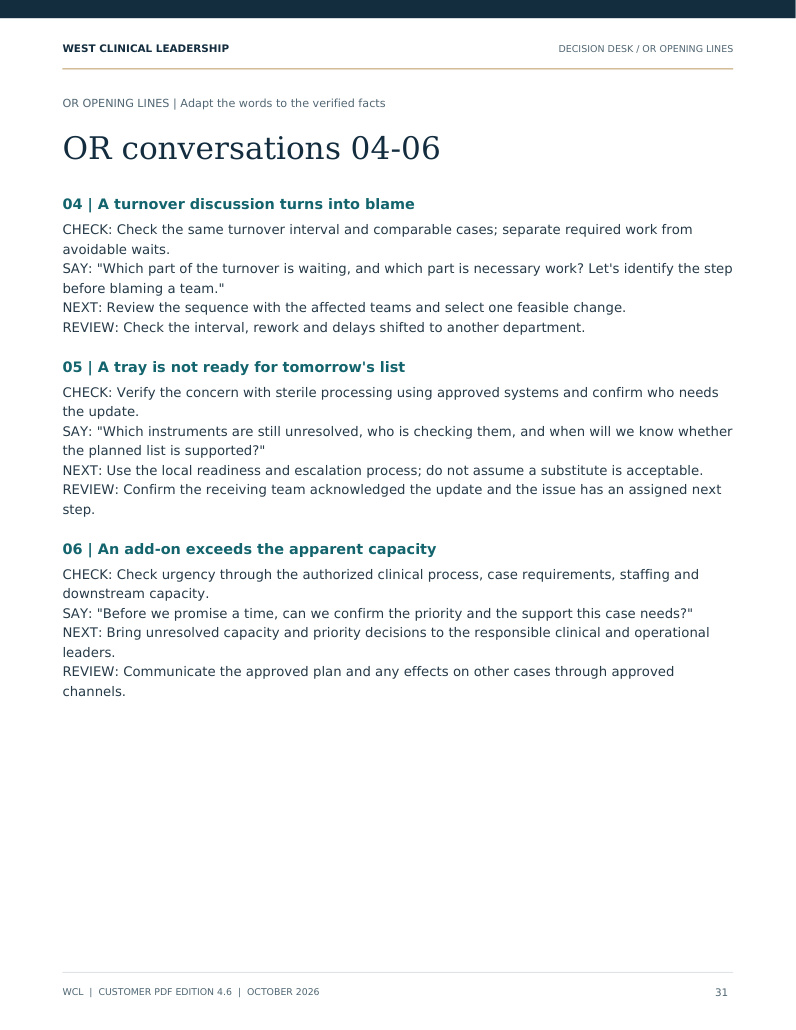
Read the product sample as text
Decision Desk is an educational toolkit, not access to an adviser. Follow organizational policy, required reporting and authorized support routes.